About This Blog

The purpose of my blog is mostly for review, film analysis, and other posts relating to popular culture. I always love to entertain and love to share the wonderful things I see. Join me on a journey through my life and the world
Showing posts with label Russia. Show all posts

Tuesday, August 4, 2026

The Problem with War No One Talks About

Risk Map 2023 Analysis: Russia and Ukraine

There’s no shortage of reasons for people to hate war.  From the mass casualties to the displacement of civilians to the impact on the economy to the famine it can cause, war causes no shortage of problems for humanity.  However, there is an issue that most people don’t talk about when discussing war.

Wars don’t just produce winners, losers, and stalemates.  They also change countries, redefine their culture, build new alliances, and change national or international politics.  War has the potential to destabilize order and create new crises.  For that reason, it is worth discussing how that can (or could) change the political landscape.


After the United States removed Saddam Hussein, the country fell into a power vacuum with a shaky democracy.  As a result, Iran started setting up shop and backing militias that served its interests.  It also managed to build a relationship with Iraq through shared culture and religion.  


On the other end, the terrorist group ISIS rose in the absence of Saddam’s leadership and used hardship in the country to gain supporters.  As a result, his removal also led to the rise of a major terrorist organization in the region that the US also later had to fight.  Unintentionally, the US created an ally for one of its greatest enemies, and a new monster it also had to defeat just by eliminating one of its longtime enemies in the region.


Another example of strange relationships being forged during war would be the Napoleonic wars.  During the war with Napoleon, Prussian, Austrian, and Russian leadership had to come together as allies to oppose his efforts and stop him from conquering Europe.  However, all three nations were historic enemies so once the shared threat was gone, so was their unity.  War can create temporary alliances, but once the threat is gone the status quo will return.


The point is that war doesn’t just result in immediate pain.  It also causes regional crises and destabilize relationships among the populace.  It can also cause weird friendships that don’t last or get replaced when the moment arises.  So, it may be worth considering how current conflicts are already changing the region.


In Iran, the death of the previous Supreme Leader led to a power vacuum among leadership.  Since there’s no confirmation that the current Supreme Leader is even alive anymore, it seems that the Islamic Revolutionary Guard Corps (IRGC) is taking over the government and exerting even more control on the government than it already had.  As a result, the pretense of being an authoritarian theocracy is evaporating as Iran is about to become a military dictatorship with a theocratic front.


Meanwhile, there are even further divides in the Middle East.  With Iran’s attacks on regional states, already weak relationships with the country are gone as everyone (deservedly so) hates them.  Also, this is impacting other alliances as the UAE left OPEC, helping grow a rivalry between them and Saudi Arabia.  In short, the Iran War has shifted the balance of power in the middle east and made the Iranian Government even more authoritarian.


Iran's Khamenei seeks long-term Moscow, Tehran cooperation | Reuters

Another conflict that has potential to reshape the world order is the Ukraine conflict.  Obviously, what’s happening with Russia matters to Europe as Putin has claimed that many of the regions border it are historic Russian territory, trade between Russia and Western Europe is at an all time low which is impacting multiple national economies, and this is causing infighting across NATO as debates come on who should pay for how much of the military alliance.  So a former superpower attacking a country trying to join the biggest military and economic alliances on the globe shaking up their continent’s economy isn’t surprising.


What is surprising is the possible fallout.  Russia has seen its economy stagnate, especially in its capital city, and become increasingly dependent on China.  There has been a push for Russia and China to join forces, but that has resulted in Russia becoming a junior partner as China is starting to push its influence more into the country and seems to have plans for what it wants to do with Russian territory.  With that happening and the decline in trade, Russia is seeing its influence and connection to Europe shrink.  So it's looking to be another “once great empire” with limited influence and continued military defeats against Ukraine could result in it being seen as not much of a threat to European nations.


The elimination of a European threat may be seen as a positive, but like Napoleon’s downfall, the end of a shared threat brings about old rivalries.  After all, both Ukraine and Poland are historic rivals who have a shared hatred of Russia.  When their common threat disappears, how long might they stay as allies?


This is an interesting question.  Poland intends to have the largest land military in Europe by 2030 while Ukraine has been leading the way in drone technology.  If those countries found themselves both wanting to dominate Eastern European cultural influence, they may find themselves in a Cold War.  So one must wonder what will happen if Russia is defeated like the West wants.


So, will Iran become the Middle Eastern North Korea?  Will Russia become a vassal state to China?  Will Poland and Ukraine go to war?  Honestly, there’s no way to make predictions like that.


There are many factors that can change the outcome of wars, politics, and culture shifts in a region.  There’s the desire to always assume the worst case scenario, but that’s usually unlikely.  Time will tell what will actually happen.  All of this is merely factors to consider in our current world.


Which highlights the actual point of this blogpost.  Though war has obviously terrible aspects, the long term effects it can have on domestic and international politics is staggering.  As a result, it reshapes the world we live in as friends become enemies, enemies become friends, and enemies become even worse enemies.  Time will tell what our conflicts today will lead to, but most likely they’ll lead to conflicts of tomorrow.


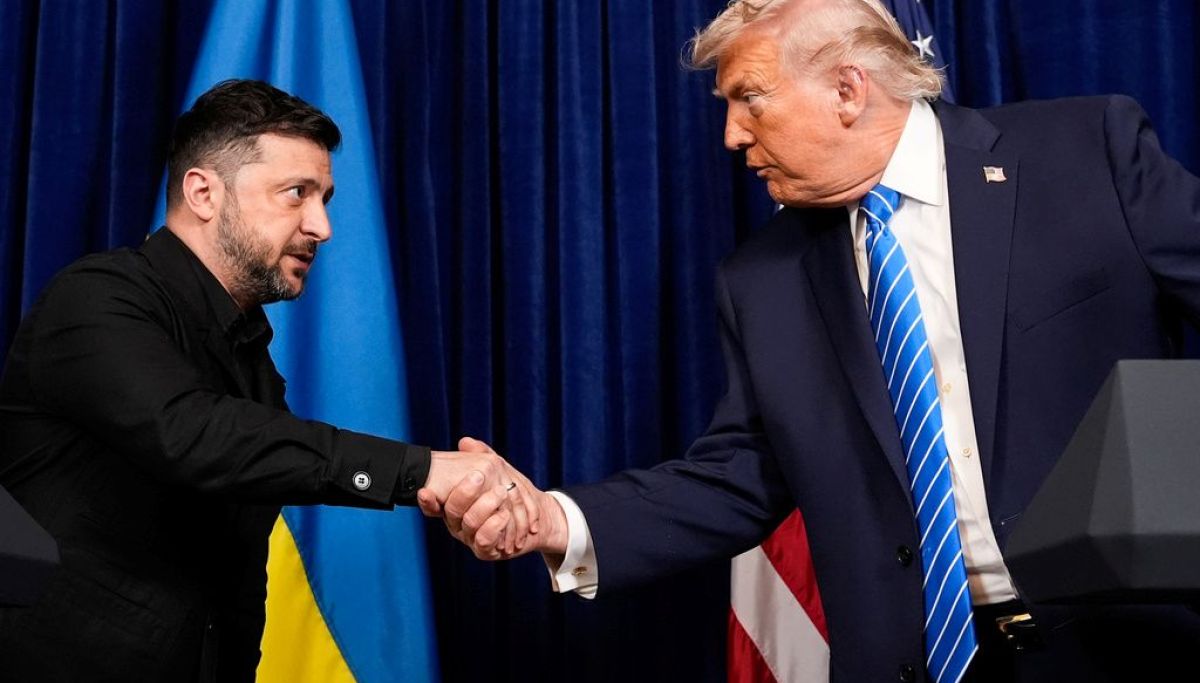
Zelensky expected to meet with Trump ahead of Netanyahu visit

Sunday, May 17, 2026

An Update on Ukraine: A Big Player in the Middle East

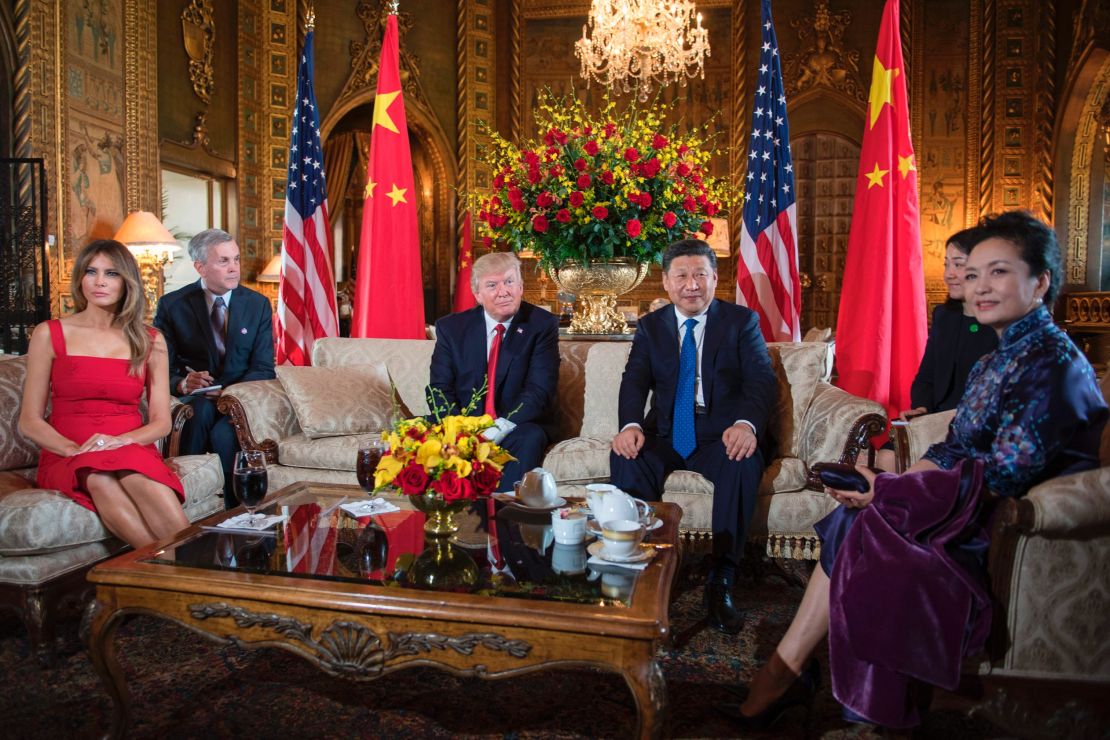
Between the war in Iran, political debates over redistricting, a possible coming invasion of Cuba after the capture of the President of Venezuela, the Reform Party growing in the UK after local elections, the defeat of the Prime Minister of Hungary at the ballot box, a growing war in Mali, the meeting between Chinese President Xi Jinping and US President Donald Trump, and much, much more, it can be easy to forget that Ukraine is in the middle of a war with Russia.  With the war entering its fifth year and limited territorial changes, Ukraine has taken a back seat in terms of media attention.  However, there have been some interesting developments recently that might be worth bringing up for anyone interested.

With the recent war in Iran, Ukraine is getting a lot more attention from Middle Eastern countries as many are interested in buying anti-drone technology from Europe’s breadbasket.  Ukraine has been pursuing deals with countries like Saudi Arabia, the United Arab Emirates (UAE), and Qatar with more to come.  This would allow for the exchange of military expertise and create joint manufacturing lines between Ukraine and its partners.  Those countries get the technology to defend their countries while Ukraine gets a hefty payday and new technology that it can use in its war with Russia.

The main reason for interest in drone technology has to do with Iran’s war with the US.  Iran has been hitting targets in those countries despite their original neutrality.  Targets have included the capital of Saudi Arabia and civilian infrastructure in the UAE.  With Iran’s love of using drones, there comes a need for using new technology to shut them down and Ukraine’s own history of drone warfare makes them a prime supplier for drone defense technology.  Keeping in mind that Russia and Iran have a history of drone trade, then that means that Ukraine’s experience in fighting them is even more vital.

Of course, Ukraine isn’t just making financial deals on drone tech or selling them to those countries.  Ukraine has already sent 200 military advisors to the Middle East to help with that technology.  Likewise, Ukraine has also admitted to helping shoot down Iranian drones in the region.  So Ukraine is becoming an active participant in the Iran War, even if indirectly.

What’s interesting is Ukraine’s motivations for being involved with the war.  Now, the money is an obvious incentive, or one could say that President Volodymyr Zelensky is doing it out of the kindness of his heart.  However, there is a consistent bogeyman at the heart of Ukraine’s actions, and that bogeyman is, of course, Russia.

Due to Iran’s depleted stockpiles, Russia is supplying Iran with drones as well as targeting information and other support.  There were also rumors that Supreme Leader Motjaba Khamenei was hiding in Russia to get medical care.  So Russia is also an active participant in the Iran War, and opposition to Iran does serve the objectives of Ukraine as well so long as that is the case.

It’s not just the Middle East though that’s interested in Ukraine’s tech.  Zelensky said that about 20 countries are interested in his drone technology, and that includes European countries like Norway, the Netherlands, and Germany.  A Dutch company that was helping the US track drones even said that Ukraine played a role in developing its technology.  So Ukraine is redefining warfare and technology in the modern day and for the future.

With that in mind, it’s probably important to understand the US is likely going to need Ukraine going forward just as Ukraine needed the US during its own war.  The US is still developing its own drone technology and warfare approach, and with drones redefining war in the 21st century, it will need the support of countries like Ukraine that have had that experience.  Also, with Russia supporting US enemies like Iran and China, that means that we’ll need countries that have a history of dealing with Russia as they do benefit from the international conflict.  For example, Russia was actually set to benefit with oil sales due to the shortage from the closure of the Strait of Hormuz and corresponding price hikes, but Ukraine’s attack on the Russian oil industry has reduced that windfall.  So Ukraine will be a vital US ally if we let it be, and it seems like it is playing a key role in dealing with the consequences of our own wars.

As for Europe, the future is increasingly becoming the East.  Poland now has the largest land military in the EU which makes it a dominant country in the region.  Meanwhile, Germany has deployed its own troops outside its borders for the first time since WWII, and they deployed them to Lithuania which has a border with Russia.  So the future of Europe is increasingly becoming the East, and that will have consequences for the West.

So all of this shows just how internationalized war is in modern times.  The US goes to war with Iran, Iran gets support from Russia, Iran attacks the Middle East, the Middle East buys tech from Ukraine, and Ukraine plays a role in the US’s foreign policy objectives.  One could say we may already be in WWIII, but that may be too premature a call.  Regardless, Ukraine will be positioned to be a big player in world affairs if it can survive the war with Russia, and it will be interesting to see what the future holds for it.

Wednesday, February 18, 2026

Venezuela was Just the Beginning

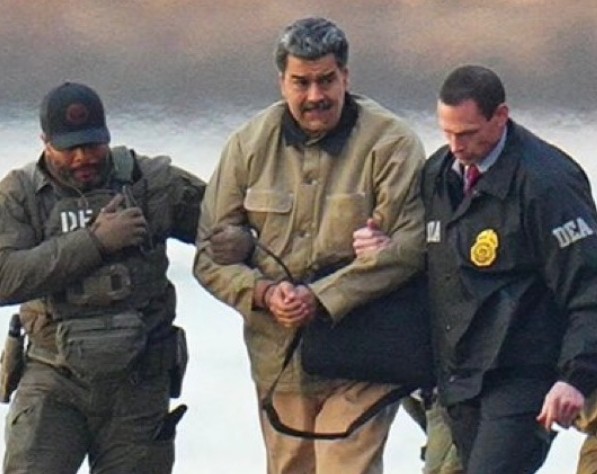
On January 3rd, Americans and Venezuelans woke up to the announcement that U.S. special forces had captured Venezuelan president Nicolas Maduro.  This was met with many opinions, but mostly shock as an action like that rarely happened outside of war and the U.S. was not at war with Venezuela at the time.  Now, because Maduro was arrested on drug trafficking charges, one may think that this was an isolated event based on conflict that had been brewing between the two countries for sometime.  However, if we look at events going on in the world, we’ll see that this might be part of a growing strategy realignment for the U.S., one that suggests what happened in Venezuela was only the first step.

Since the downfall of Maduro, the U.S. has been getting more heavily involved in international affairs and setting up possible regime change.  The Trump administration’s attempt to take control of Greenland is probably the most publicly well known example, but that’s hardly the only one.  Examples of Trump’s growing involvement in foreign affairs include:


Keeping in mind the U.S. is the world’s largest empire, it’s not surprising it’s involved with so many different world events and is trying to influence foreign governments.  However, this seems at odds with the Trump Presidency because in his first term, he was the first President since Jimmy Carter to not start a new war and set the original timeline for withdrawal from Afghanistan (which was disregarded by the Biden Administration).  Likewise, this is still a break from his predecessors as Obama and Biden sought to improve relations with Iran and Cuba, and Biden’s administration even increased the bounty on Maduro’s head yet didn’t go through with the military capture.  So what could be motivating the change?


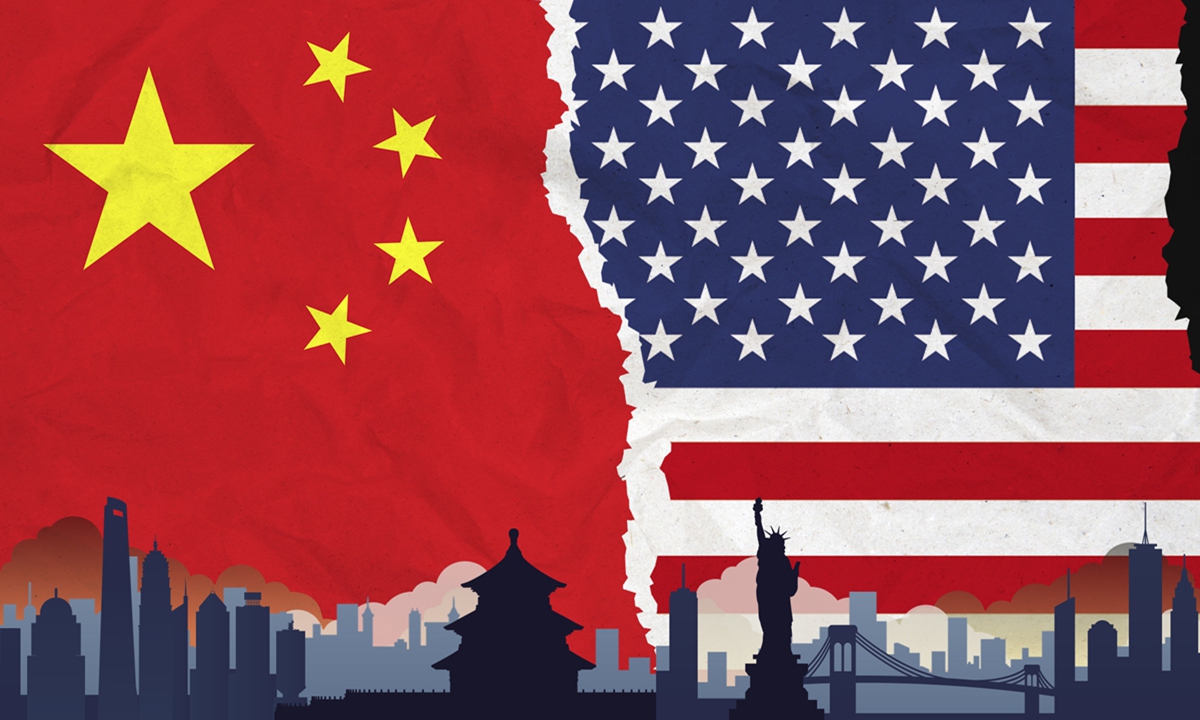
To put simply, China and, to a lesser extent, Russia.  The two countries have been growing their influence around the world and seem to have plans to build (or in Russia’s case, rebuild) a global empire that threatens U.S. dominance as the world superpower.  There are many actions they are taking that put the U.S. influence at risk and increase their potential power, such as:


  • Europe and Canada-China has been seeking to expand their influence financially and politically with the U.S.’s historic allies, creating division and serving as a potential long term threat to the U.S. and national liberty

  • Iran-80% of Iranian oil exports go to China and both China and Russia have been supplying weapons to the country

  • Cuba-Interestingly, Cuba has a history of supporting communist groups globally, and had strong relations with Maduro and his predecessor Hugo Chavez.  In regards to China and Russia specifically though, both countries have provided trade and aid to Cuba, and China was accused of building advanced listening posts on the island to spy on the U.S.

  • Venezuela-Under Maduro, China is Venezuela’s largest purchaser of oil and Venezuela sits on the world’s largest oil reserves.  Longterm, that’s a strategic threat to the U.S. if it’s helping fuel China’s military

  • Nuclear testing-Russia had already suspended its participation in the START treaty back in 2023 and had been accused of violations by the state department even in 2025.  However, the Trump administration also mentioned China performing secret, underground nuclear tests back in 2020 as justification for letting it expire as well.  China wasn’t a party in the START treaty, but their handling of nuclear weapons makes the one with Russia out of date and stresses the need for new treaties that include both countries

  • Africa-there was a series of coups across former French colonies.  Russia has been using them as an opportunity to grow its economic and military power, even supporting some for Moscow’s benefit, moving Africa away from France and towards Russia.  Also, China has its only foreign military base in Djibouti, near Somaliland


That’s only a drop of international involvement from China and Russia that’s been stirring tensions around the world.  From China’s Belts and Roads Initiative to increased investments in Brazil in Argentina (which the latter was recently bailed out by the U.S.), to Russia’s President Vladimir Putin going on trips to former Soviet territories and allies, it seems that both countries are getting more heavily involved in international affairs and trying to shore up resources and support.

With current events being what are, that puts a lot of actions by the U.S. in context, from seeking to build an anti-missile defense system that would include territory in Greenland to regime change to Secretary Marco Rubio’s speech calling for good European-US relations based on shared culture at the Munich Conference to increased involvement in Latin America and much, much more, the U.S. seems to be drawing lines in a new, growing cultural and political war with the two largest countries on the Asian continent.  Only time will tell what this leads to, but the events in Venezuela foreshadow a growing international divide and may be the start of a new political reality.