About This Blog

The purpose of my blog is mostly for review, film analysis, and other posts relating to popular culture. I always love to entertain and love to share the wonderful things I see. Join me on a journey through my life and the world
Showing posts with label China. Show all posts

Wednesday, February 25, 2026

Is Marco Rubio Running the White House?

The headline is extremely clickbaity, but it’s a question that might be worth asking.  Since being confirmed as Secretary of State, Marco Rubio has been heavily involved in some of the most important international political events of the still developing 21st century, and his influence only seems to be expanding with each passing day as more situations globally keep developing.  It might be worth investigating how much influence he has, then, and how his role continues to develop.

So to start off with, a little background on Marco Rubio.  Elected to the U.S. Senate in 2010, Rubio would go on to serve on the Senate Committee on Intelligence (where he was the acting chair and then ranking member) and the Committee on Foreign Relations.  He also served on the Committee on Appropriations, which, while not directly dealing with foreign affairs, does have full jurisdiction over all discretionary spending and military spending constitutes 56% of the federal discretionary budget.  So he was very heavily influential in government legislative committees that focused on foreign and military affairs.

Of note, he had a particularly prominent history of supporting military intervention in foreign affairs.  In the senate, he supported the overthrow of Muammar Gaddafi in Libya, supported giving ammunition to Syrian rebels during the civil war under Bashar al-Assad, pushed against establishing diplomatic ties with Cuba during the Obama administration, called for revolution in Venezuela and met with an opposition leader that was accused of attempting a coup by the Maduro government, supported increased military ties with China’s neighbors (and enemies), etc.  Of note, during the 2016 presidential primaries, he was the candidate who called for use of military force third most out of all of them according to the CATO institute (Trump was dead in the center between most calls and least calls).  So he has a history of wanting to use military force to accomplish America’s foreign policy objectives.

This is noticeable because since he’s become Secretary of State and National Security Advisor (the first to hold both positions at the same time since Henry Kissinger back in the 70s), the Trump administration has taken a noticeably more hawkish tone since its first term.  Similarly, many of Rubio’s policy agendas when he was in the senate have been coming to fruition.  During his tenure as Secretary of State, the US has captured now former Venezuelan President Nicolas Maduro, placed an oil embargo on Cuba while talking about regime change, and placed steeper tariffs on China while pushing stronger military relations with Japan.  In addition, the US has pushed to take Greenland and has created the largest military buildup in the middle east around since the Iraq War due to a growing possibility of war with Iran (a country which Senator Rubio supported sanctions on).  So it seems like much of Rubio’s agenda in the senate is being reflected by the Trump administration.

Now, one could argue that Trump possibly changed his mind during his four years out of the office.  Besides, many of these countries are ones he clashed with during his first term as President.  After all, he did take out the leader of Iran’s Quds force, struck Syria, and recognized Venezuela’s opposition leader as the real head of the country’s government during his first term.  He’s also been a long term critic of China so being strong against them isn’t all that surprising.  Therefore, Trump’s actions are not definitive proof that Rubio is in complete control of the US’s foreign policy.

However, the fact that Rubio is getting most of his foreign policy agenda as a senator made a priority by the current administration does show the impact and influence he is having.  Likewise, he has publicly disagreed with his boss, noticeably when he downplayed military options to take Greenland when Trump refused to rule that out and took a more collaborative tone towards working with Europe than did JD Vance at the Munich Security Conference.  The fact that he is able to push back on those with higher authority than himself when disagreement has led to firing of officials in the past shows that Rubio may be in a safe position.

Similarly, there have been reports about Trump’s dependence on those closest to him.  There was a saying that during Trump’s first term, the last person he spoke with was usually the one he agreed with at the time.  Keeping in mind that Trump had never been elected before, it’s not surprising that he wanted to take advice from people with more experience than himself in the governmental field.  However, Rubio was not a direct member of Trump’s administration during his first term so that means he has a lot more opportunity to influence the President.

The final point to consider is the weakness of Trump’s ability to accomplish his domestic agenda.  Noticeably, Speaker of the House Mike Johnson has struggled to get legislation passed, making an inactivity record, which makes it hard to pass domestic policy since most of that is in the hands of the legislature.  Similarly, a lot of the early policies of the Trump administration was supported by investigations from the Department of Government Efficiency, an initiative championed by Elon Musk.  However, Musk is no longer part of the administration so that initiative seems no longer to be front and center in Trump’s administration.  Increasingly, Trump’s agenda is moving away from what requires congress’s help and is becoming more focused on how he can assert himself internationally.  That means that much of the Trump administration’s second term will be defined by Marco Rubio.

In fairness, there’s a saying that leadership is about getting the right people in the right positions.  If Rubio is directing the White House’s current agendas, then that isn’t a statement of weakness on the President since his goal is to lead the executive branch and make sure the right people are doing the job he requires of them.  However, this blog post should show how much influence Secretary of State Marco Rubio has and how much he can shape the direction of the president.  So it is likely he might be the one actually determining US policy, at least internationally, going forward.  Regardless, whatever his influence, a biography on him will likely be a fascinating read, and a must for anyone who wants to understand US foreign policy in the 21st century.


Wednesday, February 18, 2026

Venezuela was Just the Beginning

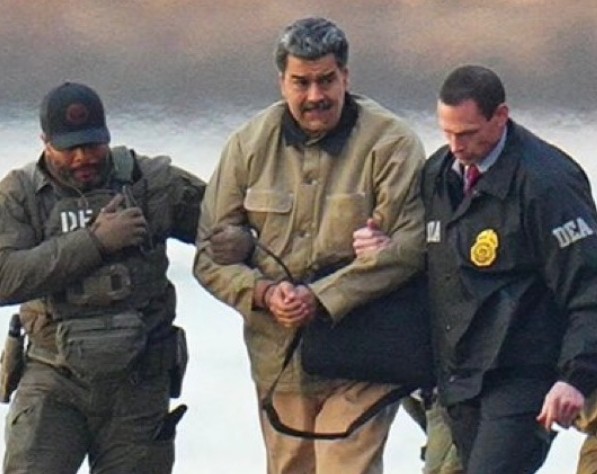
On January 3rd, Americans and Venezuelans woke up to the announcement that U.S. special forces had captured Venezuelan president Nicolas Maduro.  This was met with many opinions, but mostly shock as an action like that rarely happened outside of war and the U.S. was not at war with Venezuela at the time.  Now, because Maduro was arrested on drug trafficking charges, one may think that this was an isolated event based on conflict that had been brewing between the two countries for sometime.  However, if we look at events going on in the world, we’ll see that this might be part of a growing strategy realignment for the U.S., one that suggests what happened in Venezuela was only the first step.

Since the downfall of Maduro, the U.S. has been getting more heavily involved in international affairs and setting up possible regime change.  The Trump administration’s attempt to take control of Greenland is probably the most publicly well known example, but that’s hardly the only one.  Examples of Trump’s growing involvement in foreign affairs include:


Keeping in mind the U.S. is the world’s largest empire, it’s not surprising it’s involved with so many different world events and is trying to influence foreign governments.  However, this seems at odds with the Trump Presidency because in his first term, he was the first President since Jimmy Carter to not start a new war and set the original timeline for withdrawal from Afghanistan (which was disregarded by the Biden Administration).  Likewise, this is still a break from his predecessors as Obama and Biden sought to improve relations with Iran and Cuba, and Biden’s administration even increased the bounty on Maduro’s head yet didn’t go through with the military capture.  So what could be motivating the change?


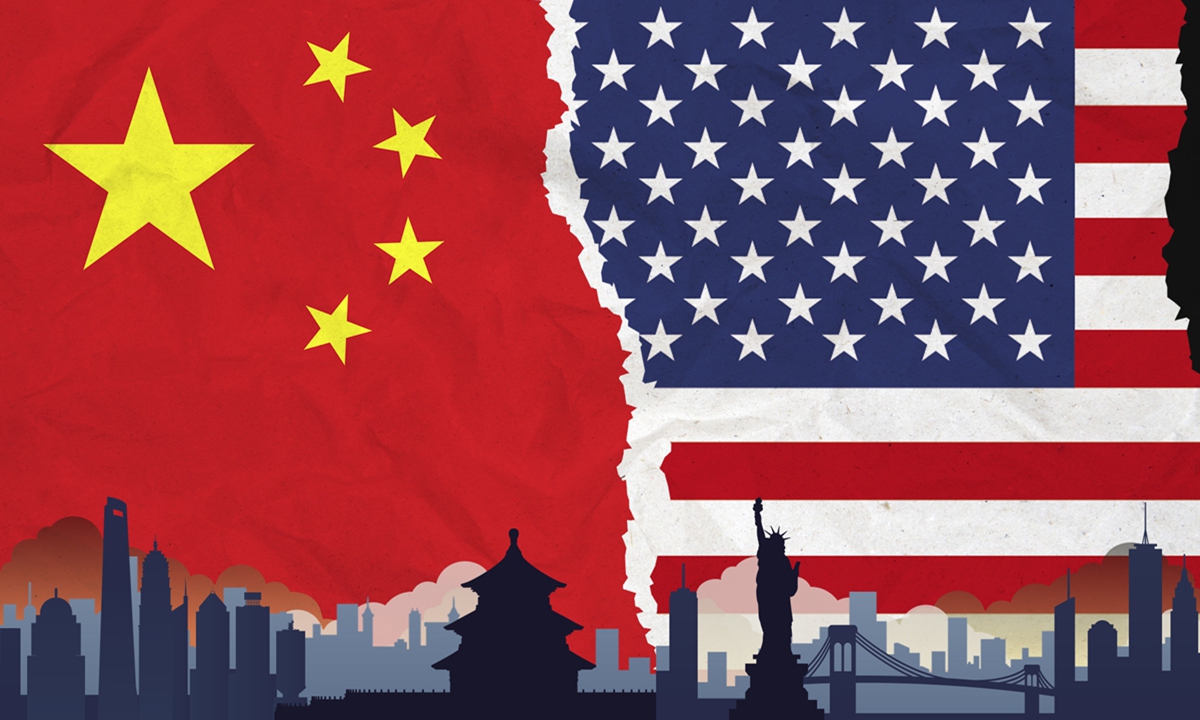
To put simply, China and, to a lesser extent, Russia.  The two countries have been growing their influence around the world and seem to have plans to build (or in Russia’s case, rebuild) a global empire that threatens U.S. dominance as the world superpower.  There are many actions they are taking that put the U.S. influence at risk and increase their potential power, such as:


  • Europe and Canada-China has been seeking to expand their influence financially and politically with the U.S.’s historic allies, creating division and serving as a potential long term threat to the U.S. and national liberty

  • Iran-80% of Iranian oil exports go to China and both China and Russia have been supplying weapons to the country

  • Cuba-Interestingly, Cuba has a history of supporting communist groups globally, and had strong relations with Maduro and his predecessor Hugo Chavez.  In regards to China and Russia specifically though, both countries have provided trade and aid to Cuba, and China was accused of building advanced listening posts on the island to spy on the U.S.

  • Venezuela-Under Maduro, China is Venezuela’s largest purchaser of oil and Venezuela sits on the world’s largest oil reserves.  Longterm, that’s a strategic threat to the U.S. if it’s helping fuel China’s military

  • Nuclear testing-Russia had already suspended its participation in the START treaty back in 2023 and had been accused of violations by the state department even in 2025.  However, the Trump administration also mentioned China performing secret, underground nuclear tests back in 2020 as justification for letting it expire as well.  China wasn’t a party in the START treaty, but their handling of nuclear weapons makes the one with Russia out of date and stresses the need for new treaties that include both countries

  • Africa-there was a series of coups across former French colonies.  Russia has been using them as an opportunity to grow its economic and military power, even supporting some for Moscow’s benefit, moving Africa away from France and towards Russia.  Also, China has its only foreign military base in Djibouti, near Somaliland


That’s only a drop of international involvement from China and Russia that’s been stirring tensions around the world.  From China’s Belts and Roads Initiative to increased investments in Brazil in Argentina (which the latter was recently bailed out by the U.S.), to Russia’s President Vladimir Putin going on trips to former Soviet territories and allies, it seems that both countries are getting more heavily involved in international affairs and trying to shore up resources and support.

With current events being what are, that puts a lot of actions by the U.S. in context, from seeking to build an anti-missile defense system that would include territory in Greenland to regime change to Secretary Marco Rubio’s speech calling for good European-US relations based on shared culture at the Munich Conference to increased involvement in Latin America and much, much more, the U.S. seems to be drawing lines in a new, growing cultural and political war with the two largest countries on the Asian continent.  Only time will tell what this leads to, but the events in Venezuela foreshadow a growing international divide and may be the start of a new political reality.


Saturday, August 3, 2024

Putin Meets with China's Enemies

This blogpost is going to be very late, but it’s worth making sure the general public is aware of what’s going on on the Asian continent.  Over a month ago, Vladimir Putin went on a trip to Vietnam and North Korea, officially to discuss new military ties.  However, one thing worth considering about both nations is that they both have at best mixed histories with Russia’s “ally,” China.  While Russia has become increasingly dependent on China as its relationship with the West has deteriorated, its outreach may be aimed at creating a counterbalance to China’s power and may cause further divisions between the two nations.

For context, with Russia’s continued war in Ukraine, relations have continued to deteriorate between the country and most of Western Europe.  One example of this would be alleged Russian involvement in overthrowing the governments of multiple former French colonies.  However, the most pressing reason for deteriorating relations is the war in Ukraine itself which resulted in reduction in trade between the West and Russia.  To compensate, Russia has become increasingly dependent on trade, especially military trade, with alternative countries such as China.

The relationship between Russia and China has always been contentious though because (my friend Sean says) no country wants to be the junior partner.  Both nations have always had territorial, military, and political disputes.  Current problems with their relationship include China claiming parts of Russia are historic Chinese territory (which there is a case for) and Russia preparing plans for a preemptive nuke strike on China in the event of needing to win a war fast.  In short, it seems that as Russia becomes more dependent on China, China wants to take advantage of Russia while Russia wants to maintain its independence.

So Putin’s decision to visit North Korea and Vietnam this year likely isn’t something that made Beijing particularly happy.  North Korea also has a contentious history with China while Vietnam has an outright hostile relationship with them (not helped by the fact that China invaded them after the US did).  With all that historic background, it does seem possible the Russian President wanted to discuss potential alliances against China.

Though Russia has its own territorial disputes with Ukraine, China has other issues with its neighbors as well.  Americans may be familiar with China’s desire to take Taiwan, but they are in a border dispute with India (a Russian ally), they are in a territorial dispute with the Philippines, and there are deteriorating relations between Malaysia and China.  All this though also ignores historic clashes between China and countries like Japan or South Korea.  Bottom line, most Asian countries that aren’t China, hate China.

So Putin’s decision to meet with Vietnam and North Korea suggests Putin may be preparing for the worst with China.  Of course, both have a mutual enemy with the US, but like with the US and USSR after WWII, the lack of an enemy often leads to division.  Regardless, Putin’s actions with China’s neighbors may suggest Russia considers their “ally” China a potential problem in the future.