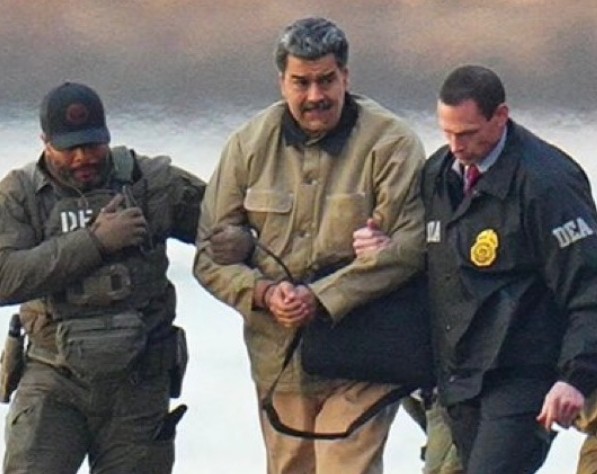
On January 3rd, Americans and Venezuelans woke up to the announcement that U.S. special forces had captured Venezuelan president Nicolas Maduro. This was met with many opinions, but mostly shock as an action like that rarely happened outside of war and the U.S. was not at war with Venezuela at the time. Now, because Maduro was arrested on drug trafficking charges, one may think that this was an isolated event based on conflict that had been brewing between the two countries for sometime. However, if we look at events going on in the world, we’ll see that this might be part of a growing strategy realignment for the U.S., one that suggests what happened in Venezuela was only the first step.
Since the downfall of Maduro, the U.S. has been getting more heavily involved in international affairs and setting up possible regime change. The Trump administration’s attempt to take control of Greenland is probably the most publicly well known example, but that’s hardly the only one. Examples of Trump’s growing involvement in foreign affairs include:
Iran-at this time, the U.S. is providing support to protesters, engaging in nuclear talks, and considering military strikes
Cuba-the Trump administration placed an oil blockade on the country at a time of economic decline and following major protests
Russia-the U.S. let the START treaty, which put limits on nuclear weapons, expire,
Somaliland-the United States has defended Israel’s right to recognize Somaliland, a breakaway state from Somalia. Of note, Israel is the first country to do so
Keeping in mind the U.S. is the world’s largest empire, it’s not surprising it’s involved with so many different world events and is trying to influence foreign governments. However, this seems at odds with the Trump Presidency because in his first term, he was the first President since Jimmy Carter to not start a new war and set the original timeline for withdrawal from Afghanistan (which was disregarded by the Biden Administration). Likewise, this is still a break from his predecessors as Obama and Biden sought to improve relations with Iran and Cuba, and Biden’s administration even increased the bounty on Maduro’s head yet didn’t go through with the military capture. So what could be motivating the change?
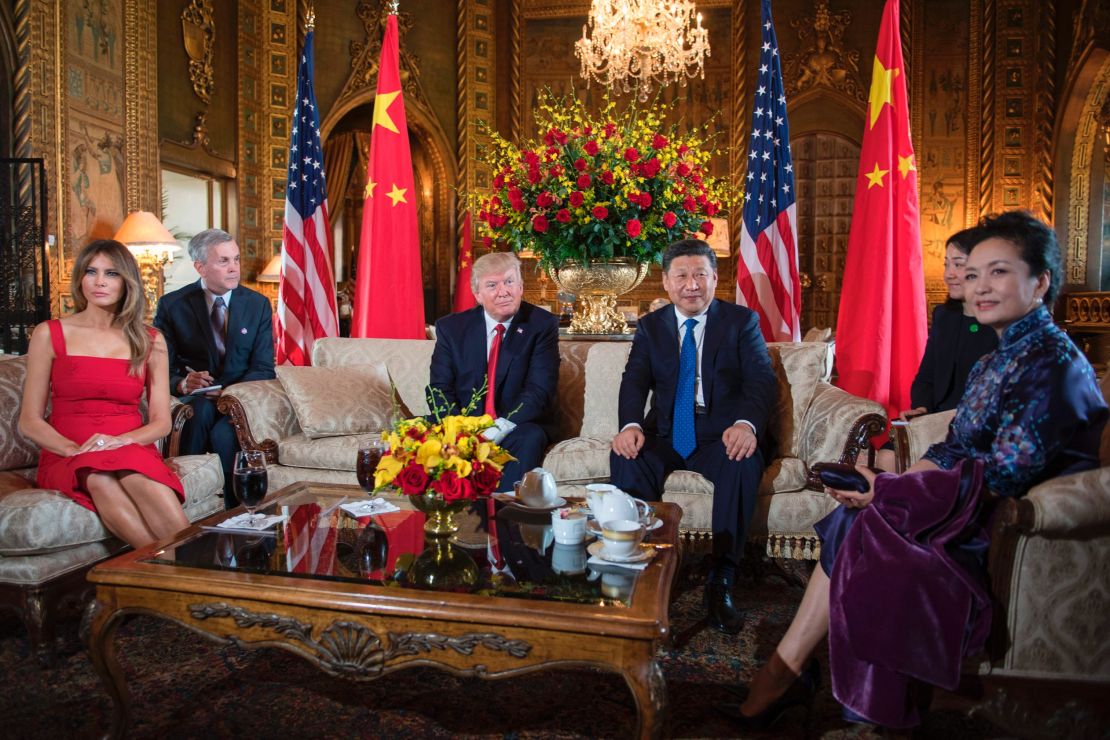
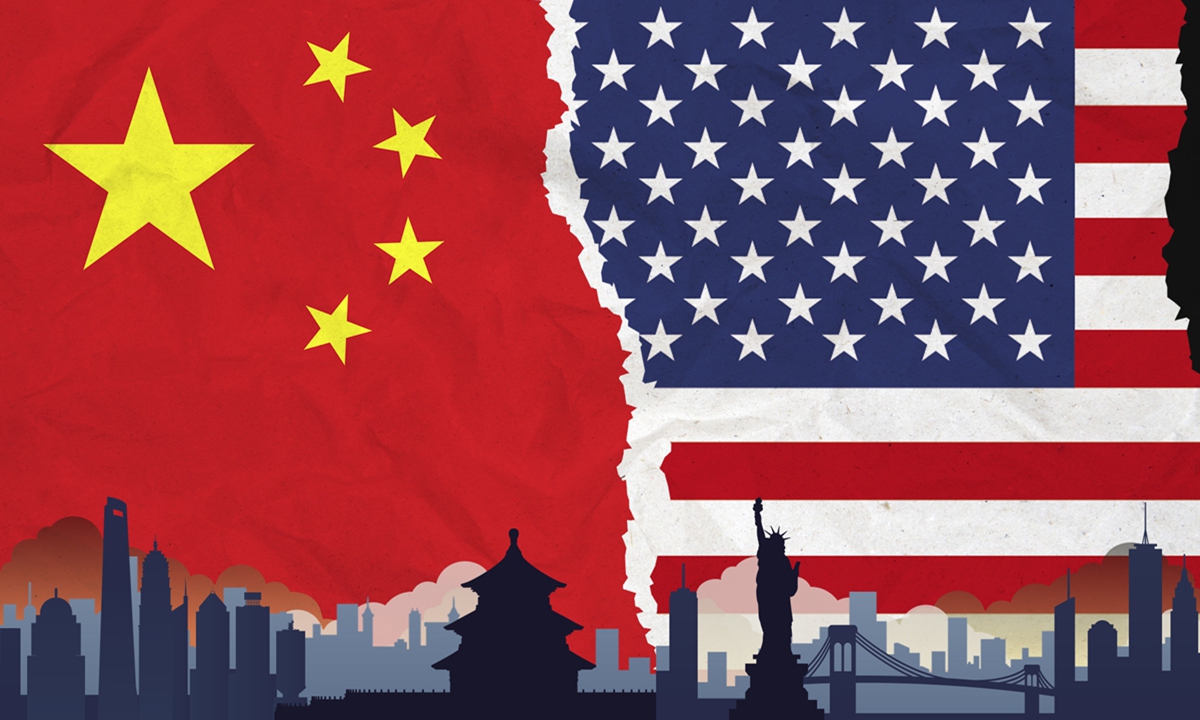
To put simply, China and, to a lesser extent, Russia. The two countries have been growing their influence around the world and seem to have plans to build (or in Russia’s case, rebuild) a global empire that threatens U.S. dominance as the world superpower. There are many actions they are taking that put the U.S. influence at risk and increase their potential power, such as:
Europe and Canada-China has been seeking to expand their influence financially and politically with the U.S.’s historic allies, creating division and serving as a potential long term threat to the U.S. and national liberty
Iran-80% of Iranian oil exports go to China and both China and Russia have been supplying weapons to the country
Cuba-Interestingly, Cuba has a history of supporting communist groups globally, and had strong relations with Maduro and his predecessor Hugo Chavez. In regards to China and Russia specifically though, both countries have provided trade and aid to Cuba, and China was accused of building advanced listening posts on the island to spy on the U.S.
Venezuela-Under Maduro, China is Venezuela’s largest purchaser of oil and Venezuela sits on the world’s largest oil reserves. Longterm, that’s a strategic threat to the U.S. if it’s helping fuel China’s military
Nuclear testing-Russia had already suspended its participation in the START treaty back in 2023 and had been accused of violations by the state department even in 2025. However, the Trump administration also mentioned China performing secret, underground nuclear tests back in 2020 as justification for letting it expire as well. China wasn’t a party in the START treaty, but their handling of nuclear weapons makes the one with Russia out of date and stresses the need for new treaties that include both countries
Africa-there was a series of coups across former French colonies. Russia has been using them as an opportunity to grow its economic and military power, even supporting some for Moscow’s benefit, moving Africa away from France and towards Russia. Also, China has its only foreign military base in Djibouti, near Somaliland
That’s only a drop of international involvement from China and Russia that’s been stirring tensions around the world. From China’s Belts and Roads Initiative to increased investments in Brazil in Argentina (which the latter was recently bailed out by the U.S.), to Russia’s President Vladimir Putin going on trips to former Soviet territories and allies, it seems that both countries are getting more heavily involved in international affairs and trying to shore up resources and support.
With current events being what are, that puts a lot of actions by the U.S. in context, from seeking to build an anti-missile defense system that would include territory in Greenland to regime change to Secretary Marco Rubio’s speech calling for good European-US relations based on shared culture at the Munich Conference to increased involvement in Latin America and much, much more, the U.S. seems to be drawing lines in a new, growing cultural and political war with the two largest countries on the Asian continent. Only time will tell what this leads to, but the events in Venezuela foreshadow a growing international divide and may be the start of a new political reality.

No comments:
Post a Comment