About This Blog

The purpose of my blog is mostly for review, film analysis, and other posts relating to popular culture. I always love to entertain and love to share the wonderful things I see. Join me on a journey through my life and the world
Showing posts with label Democrat. Show all posts

Sunday, July 12, 2026

The Difference Between Liberals and Conservatives

Conservative and Liberal are Meaningless Labels - Phillips Theological ...

Though increasingly irrelevant as these phrases get replaced with the even harder to define phrases “right and left,” traditionally the phrase “conservatism” and “liberalism” has come to define the philosophical divide in American politics.  The oversimplification was that conservatives wanted smaller government in economic issues with increased involvement in so-called “social issues” and support for military action overseas while liberals want the opposite.  However, these aren’t beliefs so much as policy statements as they hardly explain why either group supposedly wants what they claim they want at any given moment.

Policy alone isn’t a particularly good justification for defining an ideology or philosophy.  After all, if you scour the internet, you can find all sorts of articles written in favor of the “conservative” or “liberal” case for any policy position even if they contradict existing the absolute norm that makes those policies make sense.  Then you have conservative and liberal candidates supporting the same positions in different contexts, such as both the “liberalObama and “conservativeBush causing wars once elected, the “conservativeReagan and the “liberalMichael Bloomberg both supporting gun control, the “conservativeWilliam F. Buckley and the “liberalGore Vidal both supporting marijuana legalization, and Hillary Clinton who can’t keep a policy consistent for more than a week.  Then, of course, there are political ideologies that violate policy norms like Trump-style populism or in-fighting in those ideologies like classical vs. progressive liberalism.  So that begs the question, then, as to what separates them or what defines either ideology?

I Love The '90s! Trump-Clinton Edition, Featuring Spin Doctors - Bloomberg

Well, after a lot of conversations with people in the political sphere and studying different ideologies, I came up with my own definition.  It’s hardly scientific, but I wanted to give how I tend to analyze these divides as I have found it to be the most consistent way to analyze different candidates or groups in politics.  So I’m sharing it here in the hope that it might help people when analyzing the political divide as it seems to be consistent across different groups or politicians.

Loosely defined, a conservative is someone who looks to the past for inspiration while a liberal is someone who believes that the world should be a certain way and that legislation should be used to make it so.  Conservatives traditionally believe in maintaining institutions as they exist or existed while preserving them to govern in the modern day (as that is where the term “conserve”-ative comes from).  Meanwhile, the liberal becomes interested in concepts about what the world should be and tries to build institutions or organizations that will reflect that idea and thus accomplish their goals for mankind.

To explain conservatives, most people grow up with existing institutions, be that religion, nations, corporations, non-profits, etc.  Conservatives seek to maintain those existing institutions and believe that keeping them alive is important for the benefit of society.  They realize that there is much wisdom in the past and that what came before still applies to today so they seek to use it when governing or creating new institutions.

Obi-Wan Feared Luke Skywalker Would Turn To The Dark Side In ROTJ ...

There is much wisdom in this as most of what human beings have already experienced gives us insight into what tomorrow could look like, why utopian ideas fail, and what we can expect from our interactions with others or technology.  After all, most of modern philosophy is built on the works of Socrates, Plato, and Aristotle, Christ has already risen from the dead, and the American Revolution has already happened so it seems unnecessary to reinvent any of these for the modern day when we can just maintain their impact.  Also, the past serves as inspiration for future ideas as well, as Walt Disney in part built Disneyland based on experiences from his childhood, CS Lewis and JRR Tolkien both wrote their own work based on their love of fairytales, and much of the American Capitol building’s architecture is done in a Greco-Roman style.  It’s fair to say that there is much that has been done or can be learned from history, so there is an obvious appeal to using what has come before to serve as a guiding light for tomorrow.

The two biggest drawbacks of that though both involve an inability to advance.  The first is reactionarism.  At times, what we know can be deemed incredibly safe so we refuse to make adjustments as the world changes around us.  This can be an inability to embrace new technology, refusal to acknowledge that people today aren’t as interested in what came before as they used to be, or inability to make peace with the fact that the institution we used to love is no longer run by the same people so it’s not going to behave like it used to today.

The world is always changing and people come and go.  There is much we can learn from the past that can help us understand humanity, but simply repeating what was popular in yesteryear isn’t the same as maintaining it or using it in the modern day.  It’s why a lot of people can grow out of touch and simply fail to adapt as opposed to facing the current reality.

Which brings us to the second problem: some conservatives merely don’t want to change when the world around them is changing.  It’s more just a matter of going with the flow or accepting what already exists as though any new or abnormal idea will fail just because it’s unfamiliar.  99 times out of 100, that’s usually correct, but that’s really more cynicism if not built on something objective or inherent.  In short, when the institutions rot, there’s not much left for them to “conserve” and they find themselves at odds with modernity.

On the other end of the spectrum is the liberal.  One may be tempted to call them “futurists” since they bill themselves as the opposite of conservatives who are the guardians of the past.  However, the future doesn’t exist whereas the past did so it’s impossible to “conserve” a future.

Ranking Every STAR TREK Uniform, From The Original Series to STRANGE ...

Instead liberals turn to the origin of what they want the future to be: an image in their heads.  Be it philosophical, such as the writings of an ideologue, moral, such as a belief in justice, or seeing a problem in the world and hope to address it, such as eradicating poverty.  Plenty of conservatives may want similar ends as well, but the methodology is entirely different.  Whereas the conservative seeks to maintain, the liberal seeks to create or change to reflect a vision of what they believe could be at some point.

So their biggest weakness is Utopianism.  Because what they want may only be based on how they feel the world should be, it can be based on imagination purely.  This is great for art, but terrible for policy and social reform.

Not being based on anything but an idea, what people want may not actually be good for them and may not be based in reality.  As the Catholic Church notes, man is born corrupted due to the nature of original sin and, even after baptism, our desires are still disordered.  For that reason, without humility and objective reality, ideas and ideologies lead to ruin.

This is why, more controversially, the far-right tends to reflect the far-left more than it does actual conservatism (hear me out).  Most of the alleged end results for certain groups in the far right are based on ideas they haven’t experienced enacted.  After all, America was never an ethnostate run by a single leader, it was never a workers’ paradise, it usually only has an unregulated market before the government steps in, and most of the people who idolize the past these days didn’t grow up during it.  So, it’s fair to say that their ideology is just as utopian or removed from reality and would need to be reenacted through force.  It isn’t too surprising, then, that the far-left and far-right usually have the same beliefs on issues like abortion, race, and economics.

NBA Play-In Tournament odds, expert picks for Heat at 76ers and Hawks ...

Which is also why many liberals become conservatives over time as well.  It’s not that people drop their views on humanity and suddenly adopt a desire to change their economic platform (though that can happen).  It’s more that either they’ll eventually take over the existing order and seek to maintain what they created, or simply age out so that their ideas are no longer popular like any trend and thus be treated like they’re a product of a previous generation.  Either way, most things become conservative eventually because most things age.

Though hardly scientific, this tends to be my understanding of what separates the “conservatives” and the “liberals.”  Across different ideologies or institutions, that, more than policy, seems to separate the two philosophies.  So when analyzing what perspective someone is coming from, remember to ask if they’re trying to preserve something, or create something new.

For those wondering my views, if they couldn’t tell from previous blogposts, I’m happy to respond that I’m a

"The whole modern world has divided itself into Conservatives and ...

Tuesday, May 12, 2026

The Future of the Political Parties

 What are the differences between Democrats and Republicans? A guide to ...

A previous blogpost dealt with the future of the Republican Party under Donald Trump.


However, that same post left off asking what that would mean for the party as a whole.  Well to steal a line from Captain Barbossa, the parties are to “be two immortals locked in an epic battle until Judgment Day and trumpets sound”.  However, that doesn’t necessarily mean that the parties will be tomorrow what they are today.  In fact, I predict that, based on personal experience, the parties will actually grow to reflect each other over time while the differences become more regional than ideological.


It’s a bit of a cliche to talk about how divided American society is now.  A Gallup poll shows that the political parties are more ideologically divided now than before.  More interesting though is that the parties are also extremely divided along territorial lines with the Democrats dominating the cities and the Republicans dominating the countryside.


Another interesting trend is that many people are fleeing blue states in favor of red ones.  After all, blue states lost more congressional representatives in the last census while red states picked them up.  One could claim that’s irrelevant in the grand scheme of things as once red states like Georgia and Arizona are now purple, but, on the flip side, purple states like Ohio, Iowa, and Florida have been voting Republican more consistently these days.  So there is a growing territorial reshuffling of where the national power center is and that’s likely to continue.


So it’s likely that people are splintering into areas where people are closer to their political beliefs or, at least, not in favor of policies that hold their states’ economic growth back.  However, elections in the U.S. are run by states, not landmasses.  There are still decent sized enclaves of Republicans in blue states and Democrats in red states.  So, what happens to them as their states become more ideologically captured by either party?


Well, I was knocking doors for Michelle Davis last month during the campaign and some conversations I had may provide the answer.  There were several anti-Trump homes that told me they were voting in the primary just to stop Michelle from winning because she was endorsed by the President.  With Indiana having a Republican supermajority in the legislature and no statewide elected official that’s affiliated with the Democrats, it seems these voters believed it was better to vote in the Republican primary, which is legal since Indiana has a functionally open primary system, to get a more moderate or anti-Trump candidate since the Democratic is unlikely to win regardless of the nominee.


One could make fun of Indiana for being a one party state, but that’s true for other regions as well.  I knew people who lived in Chicago who simply didn’t vote there because Dems always won so voting there was a waste of time.  I had the same experience in Bloomington, Indiana because the conventional wisdom was that Republicans never win so it was always better to run as a Democrat.  Point is, everyone knows a region that’s essentially a one-party state and current redistricting battles are making more of them.


Which brings us back to the Greg Walker voters I was talking to that were voting just to oppose Donald Trump.  Honestly, it’s likely that may become a more likely phenomenon as the states become increasingly captured by their respective parties.  It’s possible that more voters may find themselves joining or running in parties they don’t necessarily connect with because that’s what party is in control in their area.  After all, there is no way to have influence without being involved in the community, and if you aren’t part of the local party, it’s harder to influence politicians.


With the growing regional divide, that likely may determine what the parties look like going forward.  It may no longer be conservative vs. liberal or libertarian vs progressive, but rural vs urban or south vs west coast.  Ironically, this may lead to more moderate candidates and decreased ideological polarization because it means the candidates will need to balance out the new factions in the party.  So there would be less ideological divides, but more regional divides instead.


Now I’m going to wrap this up by acknowledging that I’m not very good at making predictions.  After all, if I was then Bob Iger wouldn’t have returned as Disney’s CEO and Pete Buttigieg would have been the Dem nominee 2020.  However, I do notice trends so discussing possible consequences of those trends is still worth considering.  After all, one of my predictions may not come true, but that doesn’t mean a different possibility I haven’t thought of may address the reasons behind it.


However, with growing pushes to make it harder to vote for political opponents to win going forward, from redistricting to making Indiana a closed primary state, joining the dominant party may be the only way to be engaged in politics locally or higher.  With Republicans enjoying a slight advantage in terms of registration, that would definitely bode well for them nationally.


So will this be the future of the party or will something else happen entirely?  Only time will tell.  However, never forget that many of the state senators that got primaried last week had been in the state senate for decades.  It will be interesting to see who’s still in office in 20 years.


Premium Photo | Washington dc capitol building at night usa congress ...

Friday, May 8, 2026

The Old Republican Party is Dead

May be an image of the Oval Office and text that says 'ChaPP RIN C ARMY ARMY ES ESNAVY NAVY NAVY'

This past Tuesday, May 5th, Indiana held its primary elections.  Those who went to bed early woke up to find that Trump endorsed candidates had swept at the ballot box with five out of seven challengers beating incumbent state senators.  Outside of that, one state senator who voted against redistricting lost to a non-Trump backed candidate while a Trump backed candidate won a three way primary.  The President had a good night this week and one that will play a key role in shaping future policy in the state.

This marks a continued trend, though, of Trump backed candidates winning across the country as he has had a high success rate with his endorsement over the past decade.  After all, his candidates have won 90% of primaries and more than a majority in the general elections of both midterms and Presidential election years.  Sure, one could say this doesn’t matter as much since much of his domestic agenda has stalled in Congress and many of his backed candidates could have won anyway.  However, those points are irrelevant as Trump is reshaping the Republican party with his endorsed candidates getting elected, which means the party will be the vehicle for his platform going forward long after he’s out of the White House while the old party fades away.

Now Trump’s not purely the reason that a lot of incumbents are finding themselves facing early retirement.  The truth is that most of them are just old and out of touch with where the times are.  Several of them were in politics for decades and times have changed.  Finding themselves out of touch, it was only a matter of time before they found themselves either leaving gracefully or being pulled out of their offices.

Indiana is a reflection of that better than any state as most of the redistricting opponents have been there for decades.  Both Sens. Jim Buck and Greg Walker originally intended to retire this year, which probably made sense since the latter was in the state senate for about two decades and the former was in the state legislature for three.  Sen. Travis Holdman, who claimed his district opposed redistricting efforts, has been a state senator since 2008 and was also removed.  Meanwhile, the only two non-redistricting senators that survived the primary, Sens. Greg Goode and Spencer Deery, only became senators within the last five years.  So a lot of the election was a replacement of the old guard.

That’s generally happening across the U.S. political spectrum as a whole.  Various Trump critics/opponents that had positions in the GOP like Robert Mueller, Dick Cheney, and John McCain have all passed away.  Others, like Mitt Romney, John Boehner, and John Kasich have all retired.  In reality, a lot of Trump critics were the ones from the yesteryears of either the Bush or Clinton administrations, and they’re finding themselves removed because they’re simply too old.  So a lot of what’s happening under Trump is just the natural transition of the old guard leaving.

Unfortunately for NeverTrumpers, the fact that incumbents are leaving or being aged out doesn’t mean that this isn’t beneficial to the President.  Far from it as he is the one replacing them.  As mentioned earlier, many of his candidates are winning primaries, and, even if they don’t win the general election, having so many successful candidates win nominations means that the party will be taken over by people open to the President’s agenda.

After all, elections have consequences and they can cause ripple effects.  In Indiana, there’s already calls to replace the Senate Pro Tempore from his position.  Also, new discussions on redistricting once he’s gone are coming up, which means Trump could get his new districts in the state of Indiana.  Unsurprisingly, the states of Florida, Tennessee, and more seem to have gotten the message and are now approving new districts.  We’ll see if they survive potential court challenges, but this will set precedents for redistricting that will outlast the President.  So his influence will be far reaching because it will set a precedent for future politicians or legal precedent for rejecting such legislation.

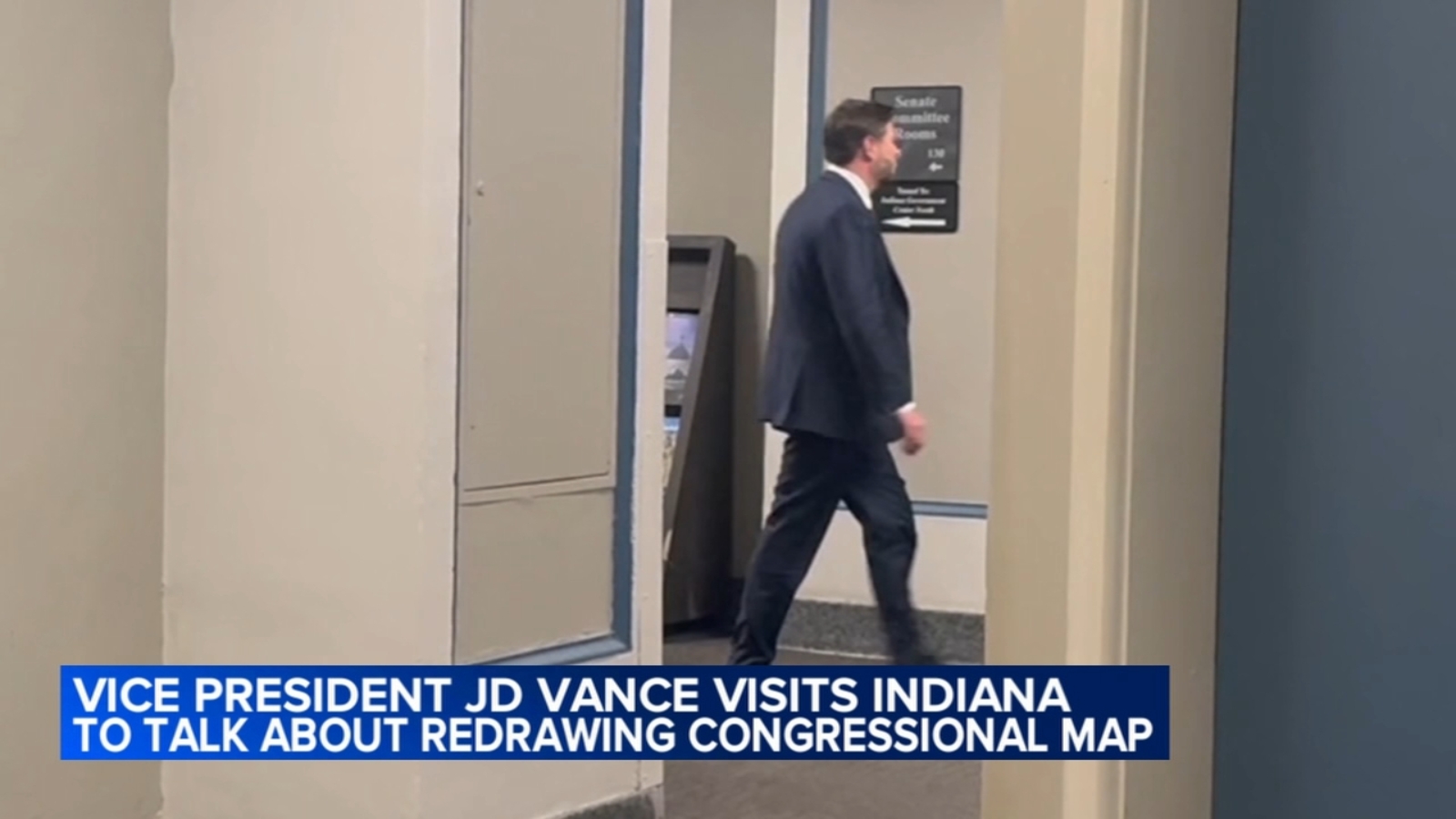
That is reflected in the makeup of the national party as well.  Already, the future candidates for President and thus leadership of the party include members of his administration like Secretary of State Marco Rubio and Vice President JD Vance so the 2028 nominee will likely be a continuation of the Trump era.  Their candidacies are also worth noting because many former critics of his administration like them and Lindsey Graham are now strong supporters of his Presidency.  Meanwhile, former supporters like Marjorie Taylor Greene and Joe Kent that have turned hardcore critics are no longer in office anymore and can only complain about him to the media and on podcasts.  Also, certain politicians like Sen. Rand Paul and Congressman Thomas Massie are still in office (at the time of writing this post), but they’re simply individuals that don’t seem to be influencing future nominees for office (yet).  So in the long run, it looks like Trump is going to influence the party for a while as his candidates win.

So, now that Donald Trump is taking over the Republican party, what does that mean for the future of the average voter?  Will the Republican become the shining example of patriotic nationalism dedicated to bringing about an almost religious love of the United States?  Will many NeverTrumpers make peace with the Democrats and mount a counter offensive, relegating the Republican party to a junior party nationally?

Well, that’s a question for another day, but some of the implications might be discussed in a future blogpost.