About This Blog

The purpose of my blog is mostly for review, film analysis, and other posts relating to popular culture. I always love to entertain and love to share the wonderful things I see. Join me on a journey through my life and the world
Showing posts with label Plato. Show all posts

Sunday, July 19, 2026

The Debate in Art: What Is vs What Could Be

Spaceship Earth | Epcot Attractions | Walt Disney World Resort

Following up on the previous post which tackled the definition of liberal vs conservative, there’s another topic that would be interesting to address: the meaning of art.  Plenty of artists and philosophers have debated the purpose of art and the impact it should have on society.  However, there are two questions that seem especially noteworthy in the modern day: should art be a reflection of the world as it is, or as it could be?

This is not as easy a question as it may appear as there’s no one way to look at the answer.  To go into more detail, the first opinion posits the idea that the art should be as realistic a portrayal of the world we live in and reflect that in storytelling and visual aesthetics.  In short, art should serve as something of an unedited photograph, capturing the world through the eyes of objective reality as opposed to the personal feelings of the artist.  The second suggests that art should be somewhat idealized in its approach to show the world as a reflection of human potential and virtue.  In a sense, it should show what we as people could become if we put in the time, effort, and patience into changing ourselves into something different.

Edward Hopper | Realist painter, 20th century, American | Britannica

Showing the world as it is gives the viewer an understanding of the present reality in which they exist.  Seeing evil in such a story makes it relatable in the sense that it lets the viewer understand the monsters they will have to overcome in their own lives while seeing good in the same type of story helps them understand how to deal with such problems in their daily life. In other words, it gives us a window into the world we live in so that we may understand it in ways we might not otherwise.

The weaker versions of this approach, though, can lead to egotistical art.  If an artist is only showing their own reality, that can make it unrelatable as it prioritizes not objective reality, but merely personal “gnosis” or experience masquerading as wisdom or understanding.  Similarly, it can then be an excuse to show ugliness as what the world is, showing a cynical worldview masquerading as truth.  In other words, bad art from this concept is usually personal biases pretending to be objective reality, which is why modern artists can make bad content that they claim reflects “the world we live in today” when it’s really just their own worldview.

L'Apoteosi di George Washington - Wikipedia

On the other hand, there is the idea that art should show what we long to be or could become when striving for it.  Many fictional characters, stories, and art pieces can serve to be inspirational to viewers and serve as guides to instill passion in mankind for a better tomorrow.  So this art serves the role of pushing man to do better and make the world a better place in light of obstacles they may see.

The downside of this, though, is Utopianism.  When an artist is removed from reality, they can make something that is not feasible yet claim it is an image of tomorrow.  This can instill an unrealistic image in the impressionable viewer, especially the young, of a world that is never coming.  This is why many parents worry about what their kids consume and what impact it can have on them as they mature.

In many ways, this debate is a reflection of Plato’s philosophy.  Plato believed that there was a perfect world where the forms, the perfect version of every concept, idea, or object, existed and that our material world is merely a broken reflection of that world.  Idealized art, then, reflects these forms of what perfect, virtuous humanity looks like while realistic art shows us the world in its material form that we’re likely to experience.  Of note, Plato in many ways was not fond of art because he viewed it as a reflection of the imperfect, material world but his divide between the perfect vs imperfect here is a good reflection of the divide of artistry here: ideal vs experiential.

Side note: Plato had many thoughts on art from its ability to corrupt to what believed was the ignorance of the average artist.  Similarly, his student, Aristotle, completely disagreed on a lot of Plato’s philosophy and art in particular.  However, that topic could fill its own blogpost so we’ll only discuss the very basics of Plato’s philosophy here.

Oscar Wilde: "Life imitates art far more than Art imitates..."

Now that the two theories on art have been discussed, one may be wondering which thought process makes better art.  The truth is, that question is completely subjective.  Both philosophies have strengths and weaknesses, so either could be useful depending on what story the writer wants to tell or how they want to tell it.  Really, as long as it fits the narrative and adds to the story, either can be a worthwhile approach.

For me personally, though, I tend to lean more towards the idealized.  When built on man’s struggles, art can show us what we can become, what we must overcome, and gives us the inspiration to persevere.  It’s why characters like Superman, Luke Skywalker, and Atticus Finch are so impactful in fiction.  They give us something to aspire towards, and if it’s feasible then that goal can be reached.

Regardless, it’s a debate the artist should have with themselves when they seek to make art.  What do you believe is the right approach?  Well, you’ll only know if you start making your own art.  Well, go right ahead and try.  Your art won’t exist if you don’t make it.

Gilbert K. Chesterton Quote: "Fairy tales do not give the child his ...

Friday, June 26, 2020

The Art of Crafting a Message Film


With every medium, art, or craft, there is a method to doing it well.  A layman may know the basics to a field such as filmmaking or writing, but to do it and do it well is another story entirely.  So today will be a discussion over a rather relevant topic: the method of putting ideas and concepts in entertainment.
There has been a large push in recent years to increase the number of political concepts and norms in pop entertainment.  From press narratives on the importance behind an upcoming film to defenses of entertainment based on the ideas of the piece, there is no denying that Hollywood is pushing to increase the discussions on relevant concepts in our media. And this is always met with backlash, derision, and loss of audience interest.  This is an abnormally common occurrence it seems.
Some may argue that this may be a sign that audiences are opposed to the messages in entertainment, but the truth is most Americans are apathetic to politics as opposed to particularly invested.  So why then is there so much backlash to the politicization of current media?  Well, to answer that, one would need to look at the nature of communication.
There are two important schools of thought on the importance of communication: looking THROUGH communication, and looking AT communication.  The concept of looking through communication is based on the belief that the primary importance of communication is to transmit an independent idea free from the medium that transmit it.  The use of language or other parts of a medium is secondary from the transmission of an idea as that must take priority.  This is why Plato hated rhetoric as he believed that it would obfuscate the actual goal of the speaker or manipulate the audience.


Looking at communication, however, was instead the idea that the medium was a part of, if not equal to, the message itself when communicating.  As brought up by Richard Lanham, the mere choosing of wording or style can change the conveyance or intent of a message.  Every bit that makes up a medium of communication, including the choice of medium itself, is important in how that message is communicated.  Therefore, there is no message without the medium of communication itself.
Just about anyone in communication will say that the medium and method is just as important to reaching people as is the message itself.  For example, many in campaigning have said that billboards and signs do little while phone calls, mailers and door knocking actually connect with people.  So when one seeks to communicate any message, following the rules of the medium are important when seeking to use it to craft a message.
When one makes a film then, the focus on filmmaking must come first before using it to tell a message.  One must follow the rules of the medium, such as “conflict is the heart of the story,” and “you admire a character more for trying than their successes.”  If the message comes at odds with the story, then bending the story to please the message does not better communicate it, it just weakens the film.  This is why message films often fail: because a bad or mediocre film leaves no impression.
A good example of this would be the problem christian films.  Often these movies are very poor in terms of film quality and not well received by critics or general audiences.  There are certainly exceptions, but often they fail specifically because they focus more on the message than actually telling a good story.


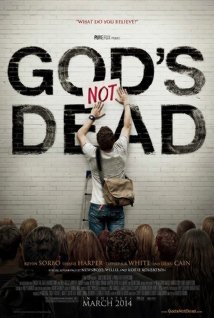
For instance, the movie “God’s Not Dead” is a perfect representation of failures of looking through communication.  The christian hero is specifically designed to act absolutely perfect while the atheist villain is as moral as Hannibal Lecter to drive the point that christians are noble, atheists are evil, and that the former will triumph over the alleged threat they impose.  He and the rest of the christians are going to win because they are noble while their enemies, though seemingly more powerful, are evil.
At face value, this can be extremely insulting because the message oversimplifies actual struggle in a cultural war.  In addition, no christian is actually perfect (Romans 3:23), so it is hard to relate to a character that lacks any level of imperfection.  The characters as a result are not real characters like an actual movie would have, but instead lifeless tools designed to represent whatever is needed.  As a result, the film is no longer a film but instead a sermon designed to sell an idea.  Even if one agrees with the message of the film, the sloppy attempts at storytelling will alienate potentially interested individuals or supporters which makes any intent pointless.
Compare that to a decent christian film like “I Still Believe.”  Though the pacing and the dialogue can be clunky, the story is built around a man dealing with the death of his wife and coming to grips with it through his belief in God.  The message flows naturally from the story which is why the message does not feel forced or like it bends the film around it.
So that is the key to producing good content.  It must follow the rules of filmmaking and storytelling while the message must flow naturally from the struggle.  If it fails to do this, it will fail to interest the particularly interested and possibly make the message look bad.  Therefore, one should always keep the rules of filmmaking and storytelling at heart when making a film and never bend it to justify an alleged message.
Crafting a story that can promote a message is a hard process that is rarely commercially successful.  If entertainment truly wants to be entertainment, it must focus on good storytelling and filmmaking first, and all else second.  If it does not, then it will continue to divide and fail to resonate.