About This Blog

The purpose of my blog is mostly for review, film analysis, and other posts relating to popular culture. I always love to entertain and love to share the wonderful things I see. Join me on a journey through my life and the world

Tuesday, July 21, 2020

My First Time at the Drive-In


A friend of mine at work told me about the Starlite Drive-In south of Bloomington so I thought I would go there.  I like to have things to look forward to to keep me focused and optimistic and, before quarantine, going to movies was always something to do.  Finding that there was any theater still open where I could social distance was an excellent opportunity.
I learned that they usually do a double feature on Friday and the Weekend and show one of the two films on the weekdays.  On Monday, they did Shrek, which I had not seen in a while and thought I would give a watch.  So I drove down, gave it a watch, and thought I would share my experiences here.
Right off the bat, the location was a bit disappointing.  It was kind of hidden away on the side of the road behind trees and further south of Bloomington than I expected.  Also, it was very dark since the clouds blocked out the moon and stars so navigating was rather unpleasant.
However, when I got there, I had a good time.  I drove up into my spot, turned my car off, and watched the film.  If I wanted to, I could also turn on my radio to listen to the film, but the speakers were loud enough where I was that I just listened to those.  The concession stand was particularly nice as it had a variety of options and the prices were low as well.
Overall, I had a good time.  It was nice to be out and about again and it was fun seeing a film at a theater again, especially since I could social distance.  So if you’re looking for something to do, I recommend Starlite Drive-In.  It is an experience I am glad I had.


Friday, July 10, 2020

Go Watch Jesus of Nazareth


Recently, a friend of mine requested I watch the 1977 miniseries Jesus of Nazareth, directed by Italian Senator Franco Zeffirelli.  I was surprisingly endeared to this miniseries and felt that it was an extremely powerful watch, especially under Quarantine.  So I wanted to talk about it here and give a review.  Mostly though, I will be discussing why I enjoyed it.
The film is a very straightforward reproduction of the life of Christ throughout the New Testament.  The film goes through the major part of his life from his birth to meeting with sinners to his parables to arriving in Jerusalem to his crucifixion and resurrection.  In addition, it actively provides context to events by showing the Romans, Pharisees, and other people as well in the miniseries to understand the stakes for Christ and everyone’s reaction to him.
Before commenting on the film itself, it is worth noting the members of the cast.  The film includes Anne Bancroft, Ernest Borgnine, James Earl Jones, Stacy Keach, Ian McShane, Laurence Olivier, Donald Pleasence, Christopher Plummer, Peter Ustinov, and Michael York.  Those are the names I immediately recognize, but there are still many more that make up the cast.  So the film is full of extremely talented people turning excellent performances that a viewer probably wouldn’t see together elsewhere.
Now, the strength of the film is in its handling of Christ as he deals with the world around him and overcoming skepticism or fear of his message.  The events are played as they would have happened in the bible and the impact is felt as well.  This miniseries gives a real impression of the power and impact of the people involved.
Christ himself is portrayed as very human.  He actually feels emotions such as anger, joy, and everything else one would expect from an actual person.  It serves as a reminder that Christ was both man and God.
However, we are reminded of his God status by the fact that he rarely fits in with human customs.  From eating with sinners to saying he will not support open revolution against the Romans, his entire focus is promoting the kingdom that is to come instead of making peace with the existing world.  As a result, he does not fit in with man and people, even his own disciples, often avoid him.


This does really remind the viewer of God’s goals: save the sinners and protect the faith.  Christ does reachout throughout the film to sinners and only gets angry when the church is being used for personal gain or at odds with salvation.  It clarifies the goals of Christianity and reminds the viewer what Christ came to do on earth.
This therefore is a pretty strong reminder of why Christ is never popular, even when the church is at times in high regard.  Christ himself is aimed at the salvation of mankind, not man’s own satisfaction in this life as it is often fleeting and easy to lose.  This is why he is often rejected by the Pharisees, the Romans, and others as they cannot benefit from his message in this life.
Still, he provides hope to many as he reunites salvation with God and gives a reminder that there is hope for the blind, the outsider, and all others as God gives his salvation to all.  This is perhaps best symbolized by the fact that the Centurion is one of the most (if not the most) faithful person Christ meets.  The Lord’s message is no longer for the Israelites but instead everyone.
Christ says his Kingdom is not of this world and that is why he and his followers are persecuted.  If it cannot be used to support the goals of those in power, it is forgotten.  The film reminds us that often being at odds with the status quo is often why something will inevitably be hated.
The film is a strong example of how to communicate ideas or a message.  Instead of trying to bend out a propaganda piece, it merely shows the life of Christ as written and provides a better understanding of everything going on at the time.  For this reason, I highly recommend a watch as it will remind us of the message of the one true Lord and savior.
At this time, there is a movement to erase history and control morality that has an unsurprising distaste for Christ.  I highly recommend this film as it reminds us of a higher calling and men’s motives in response.  Fortunately, it is on YouTube so if you have 6 hours (seriously), give it a watch.


Friday, July 3, 2020

Princess Tiana Goes to Splash Mountain


Disney has officially announced that Splash Mountain will be rethemed to feature a “Princess and the Frog” theme as opposed to a “Song of the South” theme.  This has been met with some controversy, but personally I am all in favor of this decision.  Princess and the Frog is an excellent film and an appropriate choice for the design and theming of Splash Mountain.
In full disclosure, Princess and the Frog is one of my favorite Disney films so the film getting its own ride is something I find to be extremely exciting.  From the animation to the characters to the music, the film was extremely delightful and a great addition to the Disney animated pantheon.  Tiana herself is actually my second favorite Disney princess (behind only Elsa).  So this is good news on a personal level as I will be seeing a larger presence of the film in the park.
However, in addition to that, there is a lot of opportunity to adapt the film into the ride.  The track itself and the storytelling of the ride in its current state suggest how they could be adapted around the scenes in the film.  A brief overview may be a key to explaining how that could happen.
The current layout along the water track opens out with a fishing scene set in a river and introduces the world of Br’er Rabbit while the tune “How Do You Do?” plays.  It is followed by the “Laughing Place” which is located in a dark cave that leads into a mountain climbing up to Br’er Fox’s hideout, Chickapin Hill.  After rising, this leads into a 50 foot drop directly into the Briar Patch before an exit past a riverboat scene and Br’er Rabbit returning home.
Using this track, the opening fishing scene could be a great location for the bayou with a round with the opening song “Take You There” playing while the dark and moody atmosphere of the Laughing Place could be rethemed to include Dr. Facilier and a recreation of the scene with the song “Friends on the Otherside.”  The artwork suggests that Mama Odie’s treeboat will be on top of Br’er Fox’s hideout so it will likely be her on top with a round of “Dig a little Deeper” before the drop.  The finale would stay the same though as we pass Louis the Alligator playing jazz on a riverboat and saying goodbye to Tiana and Prince Naveen.
For all I know, this theoretical pitch for how the ride could go could be completely wrong and they could switch scenes with other parts of the film, but it does show one key point.  There is potential for this story to fit in well with the design and theming of the ride, especially since both take place in the south and can use similar props.  As a result, Princess and the Frog is the perfect film to bring to Splash Mountain.


The songs as well will be a welcome addition to the ride.  Quite a few have already been listed, but each one will be needed to create the same inviting atmosphere as the current iteration of the ride.  The ride has particularly likable songs such as the Disney all time classic “Zip-a-Dee-Doo-Dah” so that will be no easy feat.  All the same, the songs from the film are well designed to create the same atmosphere if used properly.
So there is a lot of potential in this ride.  The songs, the potential visuals, the characters, and the ability to use parts of the existing layout will be what makes this a good update to Splash Mountain.  This all suggests that there is good reason to believe that the change will be a success.
Of course, I will still miss the old parts of the ride.  I still do have fond memories of the first time I saw the stork animatronics fishing on the ride and I will miss falling into the Briar Patch, the various renditions of Zip-a-Dee-Doo-Dah, and Br’er Fox, Br’er Rabbit, and especially Br’er Bear.  Leaving anything behind is hard even when the future might be brighter.
The ride itself has been a point of controversy for many due to a debate about the film the ride is based on.  However, it is important to remember that the petition on Change.org to keep the ride the same had twice as many signatures as the petition to change it.  So there is no denying that the current iteration is still beloved by many.
All the same, the direction that is being taken will still keep the spirit of the original ride the same.  After all, the 50 foot drop (the best part of the ride) will stay the same, the riverboat will probably still be used, and Disney likes to keep references to old rides so parts of the ride will still probably be hidden there somewhere.  No matter what, the same quality of the old ride will remain even after the changes.
There is no doubt change is scary, but it also provides promise for a great, big, beautiful tomorrow.  If the changes are done well, this could make the ride even better.  Only time will tell, but for now I believe this is a good thing and it will be nice to see Princess and the Frog have a larger role in the Disney Parks.


Friday, June 26, 2020

The Art of Crafting a Message Film


With every medium, art, or craft, there is a method to doing it well.  A layman may know the basics to a field such as filmmaking or writing, but to do it and do it well is another story entirely.  So today will be a discussion over a rather relevant topic: the method of putting ideas and concepts in entertainment.
There has been a large push in recent years to increase the number of political concepts and norms in pop entertainment.  From press narratives on the importance behind an upcoming film to defenses of entertainment based on the ideas of the piece, there is no denying that Hollywood is pushing to increase the discussions on relevant concepts in our media. And this is always met with backlash, derision, and loss of audience interest.  This is an abnormally common occurrence it seems.
Some may argue that this may be a sign that audiences are opposed to the messages in entertainment, but the truth is most Americans are apathetic to politics as opposed to particularly invested.  So why then is there so much backlash to the politicization of current media?  Well, to answer that, one would need to look at the nature of communication.
There are two important schools of thought on the importance of communication: looking THROUGH communication, and looking AT communication.  The concept of looking through communication is based on the belief that the primary importance of communication is to transmit an independent idea free from the medium that transmit it.  The use of language or other parts of a medium is secondary from the transmission of an idea as that must take priority.  This is why Plato hated rhetoric as he believed that it would obfuscate the actual goal of the speaker or manipulate the audience.


Looking at communication, however, was instead the idea that the medium was a part of, if not equal to, the message itself when communicating.  As brought up by Richard Lanham, the mere choosing of wording or style can change the conveyance or intent of a message.  Every bit that makes up a medium of communication, including the choice of medium itself, is important in how that message is communicated.  Therefore, there is no message without the medium of communication itself.
Just about anyone in communication will say that the medium and method is just as important to reaching people as is the message itself.  For example, many in campaigning have said that billboards and signs do little while phone calls, mailers and door knocking actually connect with people.  So when one seeks to communicate any message, following the rules of the medium are important when seeking to use it to craft a message.
When one makes a film then, the focus on filmmaking must come first before using it to tell a message.  One must follow the rules of the medium, such as “conflict is the heart of the story,” and “you admire a character more for trying than their successes.”  If the message comes at odds with the story, then bending the story to please the message does not better communicate it, it just weakens the film.  This is why message films often fail: because a bad or mediocre film leaves no impression.
A good example of this would be the problem christian films.  Often these movies are very poor in terms of film quality and not well received by critics or general audiences.  There are certainly exceptions, but often they fail specifically because they focus more on the message than actually telling a good story.


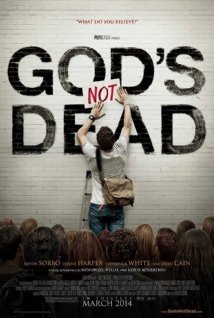
For instance, the movie “God’s Not Dead” is a perfect representation of failures of looking through communication.  The christian hero is specifically designed to act absolutely perfect while the atheist villain is as moral as Hannibal Lecter to drive the point that christians are noble, atheists are evil, and that the former will triumph over the alleged threat they impose.  He and the rest of the christians are going to win because they are noble while their enemies, though seemingly more powerful, are evil.
At face value, this can be extremely insulting because the message oversimplifies actual struggle in a cultural war.  In addition, no christian is actually perfect (Romans 3:23), so it is hard to relate to a character that lacks any level of imperfection.  The characters as a result are not real characters like an actual movie would have, but instead lifeless tools designed to represent whatever is needed.  As a result, the film is no longer a film but instead a sermon designed to sell an idea.  Even if one agrees with the message of the film, the sloppy attempts at storytelling will alienate potentially interested individuals or supporters which makes any intent pointless.
Compare that to a decent christian film like “I Still Believe.”  Though the pacing and the dialogue can be clunky, the story is built around a man dealing with the death of his wife and coming to grips with it through his belief in God.  The message flows naturally from the story which is why the message does not feel forced or like it bends the film around it.
So that is the key to producing good content.  It must follow the rules of filmmaking and storytelling while the message must flow naturally from the struggle.  If it fails to do this, it will fail to interest the particularly interested and possibly make the message look bad.  Therefore, one should always keep the rules of filmmaking and storytelling at heart when making a film and never bend it to justify an alleged message.
Crafting a story that can promote a message is a hard process that is rarely commercially successful.  If entertainment truly wants to be entertainment, it must focus on good storytelling and filmmaking first, and all else second.  If it does not, then it will continue to divide and fail to resonate.


Friday, June 19, 2020

Some Random Thoughts on Donald Duck: Goin' Quackers


So, after watching YouTuber Caddicarus, I purchased and played Donald Duck: Goin’ Quackers for the N64.  An unsurprisingly lesser known entry in Ubisoft’s history, I was fascinated by the game and thought I would add my thoughts on the game as well.  I will admit, however, that I will only be parroting a decent number of points he made so instead of doing a review, I’m just going to say whatever came to mind while playing.
For starters, the game really is a ripoff of Crash Bandicoot.  The control scheme, level layout, and goals are representative of what one would expect from a N64 port of Crash Bandicoot.  There are even time trials for those who want a 100% score, something synonymous with Crash 3.  Partner that with running from oncoming objects such as bears and trucks instead of boulders, the game clearly takes inspiration from Crash Bandicoot.
However, the game is clearly aimed at a younger demographic than Crash, so the levels are shorter and there are fewer if you do not want to 100% the game.  The only actual increase in challenge is that the tokens needed to get to the boss battle are at times harder to find than the crystals.  There are cosmetic differences, though few of those are an improvement.
Also, the story does not matter in this game.  Yes, Donald Duck has to go save Daisy who has been kidnapped, but that is as standard a game origin as one can get.  So realistically, the game lives and dies by its gameplay.
Nevertheless, I still found the game surprisingly fun to play.  It does follow the Crash formula pretty well, the gameplay is simple and fun, and there are enough elements like collecting toys or time trials that justify replay if you are a completionist.  So despite those criticisms, it does accomplish exactly what it sets out to do.
The more fascinating realization is that it is actually a better Crash game than some of the following ones.  Crash 4 failed to follow up the original by trying to increase the variety of gameplay  and widening the levels, while after that the series tried to try a new formula that worked for some and not for others but was a departure from the original formula.  So Donald Duck: Goin’ Quackers is a surprisingly better Crash 4 than Wrath of Cortex.
At the end of the day, the game is a pretty decent platformer.  It was fun to go throw and I can see myself playing it again, but will admit that if a Donald Duck rip-off of a beloved platformer does not immediately interest you like it did me (I am weird), then there is not a reason to go out and buy it.  Still, I thought it deserved some attention.
All the same, it is interesting to see what used to exist in far more successful companies used to make earlier on in their careers.  Nowadays Ubisoft makes Assassins Creed, Far Cry, and the Tom Clancy games among others, but they used to make licensed games as well that were pretty decent.  This does show where a company can go when given enough time and effort.

Friday, May 29, 2020

Silent Hill: Homecoming: A Review


This is not relevant in any capacity to any current events, but recently, I finished a play through of Silent Hill: Homecoming.  I actually really enjoyed this game when I first played it despite its negative reputation.  However, replaying it filled me with extremely mixed emotions so I thought I would discuss them here.
I thought I would do a review of everything I thought about the game since I used to play it quite a bit back in high school.  Its strengths, weaknesses, why I enjoyed replaying it, and things I was disappointed in as I relived them.  In the end, I do still enjoy the game, but think it could have been much stronger.
For an overview, the game follows soldier Alex Shepherd, returning home from war to visit his family.  However, upon arrival, he has noticed that his hometown has become rather decrepit with people vanishing, including members of his family.  Realizing that there is something wrong, he sets off to find his missing younger brother, Joshua, so the two can escape the town and get away from whatever is causing the town’s decay.
The rest of the game follows him on his search as he explores parts of his hometown of Shepherd’s Glen that are falling apart and the neighboring town of Silent Hill while he battles monsters that have started appearing.  Along the way, he comes across different individuals from his past that are either trying to escape as well or may know more about why the town has collapsed.  Each step is hopefully going to get him closer to his goal, but in reality it seems to be pushing him further away, leaving the player to ask “What the heck is going on?”
So, it is best to start with the positives.  The visuals and atmosphere of the game are very good at building a sense of uneasiness and adding to the overall horror of the area in which Alex is trapped.  Each area is very distinct from the others and yet thoroughly frightening with how it is made.  Definitely this is the perfect location for a horror game.
There is much the game offers in terms of enticing the player to keep pushing forward.  With each new revelation about the characters and areas you come across, the dark design of the levels, and finding out what exactly is going on keep the player on edge.  It creates a sense of mystery and intrigue that needs to make the player want to unravel it and keep them invested.
As for the gameplay, it’s functional.  There are issues with it as the dodge can go in odd directions at times and the knife becomes the most effective weapon in the game more so than the others ones that provide more damage since the knife’s speed means you can get a hit on enemies repeatedly before they can fight back.  However, it still accomplishes what it needs to in the end.  The game is heavily reliant on the combat oriented gameplay so the fact that it accomplishes everything it needs to is highly important for the game even if it could use some polish.  Since the game would be busted if this did not accomplish what it was design for, it is worth noting that it succeeds at that.


Now that that is out of the way, we can move onto the negatives.  Tragically, these are mostly built around spoilers as the biggest flaw is the game’s story so I will be separating that from the rest of the review in this specific section.  I will try to keep it as spoiler free an overview as I can, but the real problem with the game is the story and it holds Homecoming back from being as good as it could have been in the end.
In short, the big reveal of the game makes no sense, the potential for Alex’s background in the military is underutilized, and the game itself deviates too much from the Silent Hill franchise to be another entry in the series but takes too much inspiration from past Silent Hill media (especially the film) to be its own thing.  The game had serious potential to be a strong game in its own right, but instead blew it with the storytelling.  In the end, the game is still fun to play, but a stronger and more interesting story would have elevated it much more.


*SPOILERS*


First off, the twist makes no sense in practical sense.  It is revealed at the end that the four founders of Shepherd’s Glen and their descendents agreed to sacrifice one of their children every 50 years in exchange for the Gods of neighboring Silent Hill to leave them alone.  Alex was supposed to be the sacrifice on the 150th anniversary, but accidentally killed Joshua instead in a boating accident.  His dad was unable to continue with the ritual as a result and Alex has spent the last several years in a mental institution instead of the military, past trauma keeping him from fully remembering what happened to his brother.
This is odd because the dad could still complete the ritual if he so chose to since Alex was still alive.  Not killing Alex will lead to Shepherd’s Glen becoming overrun with monsters, which he knows, and he hated his son so there is no real concern on his part for Alex’s wellbeing since Josh was the favorite.  In the end, his decision makes no sense.
This becomes weird why Alex then doesn’t figure this out until the end.  Sure, it is unlikely his father told most people about Joshua’s death and could cover it up as a disappearance since most people started disappearing after the boy’s death so Deputy Wheeler and Alex’s girlfriend not knowing make sense, but there are characters in game like the other descendents of the other founders who would have known about the accident and would have said something to Alex at some point.  Meanwhile, Josh would not still look like he did before Alex was locked up yet still does as Alex chases his ghost throughout the game and never questions why he did not age.  At some point, something should have clicked for the protagonist and he should have figured it out.
Second, the background of Alex being a soldier is poorly used.  The early advertisements implied the focus would be on his PTSD and that the game would be a Silent Hill interpretation of coming home from war.  Since Alex’s military service was all in his head, it makes sense why this was not the focus.  However, this feels like a missed opportunity that would have been more interesting to explore.
Finally, the game is very removed from other Silent Hill games.  I know I said I had not played them in the past and could not really compare, but there are some elements I know Homecoming is taking from other Silent Hill games which is felt repeatedly throughout.  The imagery takes large inspiration from the film, and the story takes heavy inspiration from Silent Hill 2, though it is not as well executed.  If the game had only taken the visuals which were the strongest part of the film (which I have seen), then that would have been acceptable, but taking the twist from Silent Hill 2, the inclusion of series favorite Pyramid Head, and the leap in logic to justify taking the twist from Silent Hill 2 made the game look uncreative.


*END SPOILERS*


In the end, I personally give the game a recommendation but add that with a grain of salt.  The visuals and journey create an enticing atmosphere, but the actually story leaves something to be desired.  Had this been an original IP that took inspiration from the Silent Hill film and told a different story, it would have been great, but instead it was held back.  Still, I have a certain nostalgia for it and will play it again one day.  However, this is a game that is destined to remain buried with all the other games time forgot.


Sunday, April 12, 2020

Easter During Quarantine


It’s Easter time again.  On this day, we celebrate Christ’s resurrection, the day he conquered death and reconnected man with God.  Normally, this is a time for celebration among families. Usually everyone would be going to church or searching for eggs around the house.
However, recent events have put an end on those festivities.  Thanks to the Coronavirus, churches across the country are empty, people are stranded in their homes, and all major events and meetup locations are closed.  This has taken a toll on the nation as closed down businesses may never reopen and mental health issues are increasing.  For many, this time of renewal is met with doom and gloom.
Nevertheless, the time we spend stuck in seclusion is an excellent opportunity for introspection and reconsidering our lives.  Now, we can realize how important the things we’ve lost are and where our priorities lie. Even in the darkest moments, there are still ways to see the positive.
Right now, we are spending more time with our family members.  As we worry about our loved ones, we are doing more to stay in touch with them and make sure they are alright.  This will make us only grow closer.
At the same time, our priorities are shifting.  We are focusing more on survival and realizing how important things we once took for granted are while trying to make more time for them.  From this, we will learn more about ourselves and needs.
The same goes for our economy.  We’re learning which jobs are the most important to keep things moving.  In addition, we’re realizing how important industries that were shut down are to us as we eagerly await their return.
Which is another thing to be grateful for: a lot of people are working to keep this world spinning so that we’re all safe.  Be it the healthcare industry, first responders, the military, and everything else, all those people are risking the virus to help others.  So we should be grateful for that.
In the end, this is a greater time to be more empathetic.  A lot of people are struggling and many understand this. A lot will face that reality with open arms as they seek to help their fellow man.  So hopefully we will all come together after this and unify our humanity.
So this Easter, as we struggle with social distancing, let us all remember the positives and opportunities God has given us.  Eventually, this will end and things will go back to normal. Hopefully, we will come out of it with a different perspective on life and use it to grow.